



 Mohsin Lag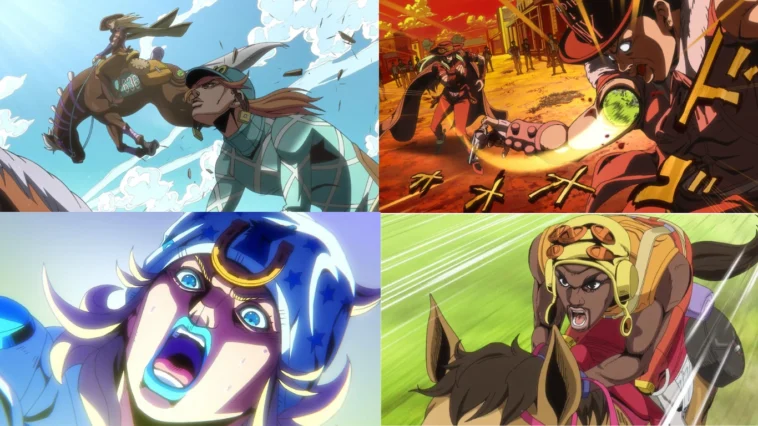
The Order in 60 Seconds
JoJo’s Bizarre Adventure is not one story — it’s a relay race through 150 years of the Joestar bloodline, and every generation hands the baton to the next. As of 2026, the anime covers seven parts across six seasons and 190+ episodes, and for once the answer to “what do I watch first?” is refreshingly simple:
- Phantom Blood (9 episodes, 2012) — where it all begins
- Battle Tendency (17 episodes, 2012–13)
- Stardust Crusaders (48 episodes, 2014–15) — the big one
- Diamond is Unbreakable (39 episodes, 2016)
- Golden Wind (39 episodes, 2018–19)
- Stone Ocean (38 episodes, 2021–22)
- Steel Ball Run (2026–present, currently airing on Netflix) — a new universe, but save it for last
Watch them in this order. No skipping, no reshuffling. The one exception — Steel Ball Run, which kicks off a fresh continuity — is explained below. And if your biggest question is whether you can skip Part 1: no. Absolutely not. Keep reading and we’ll explain why, plus where the OVAs and movies fit, and where everything streams in 2026.
The Road Through the Bloodline: Every Part in Order
Part 1: Phantom Blood (2012, Episodes 1–9)
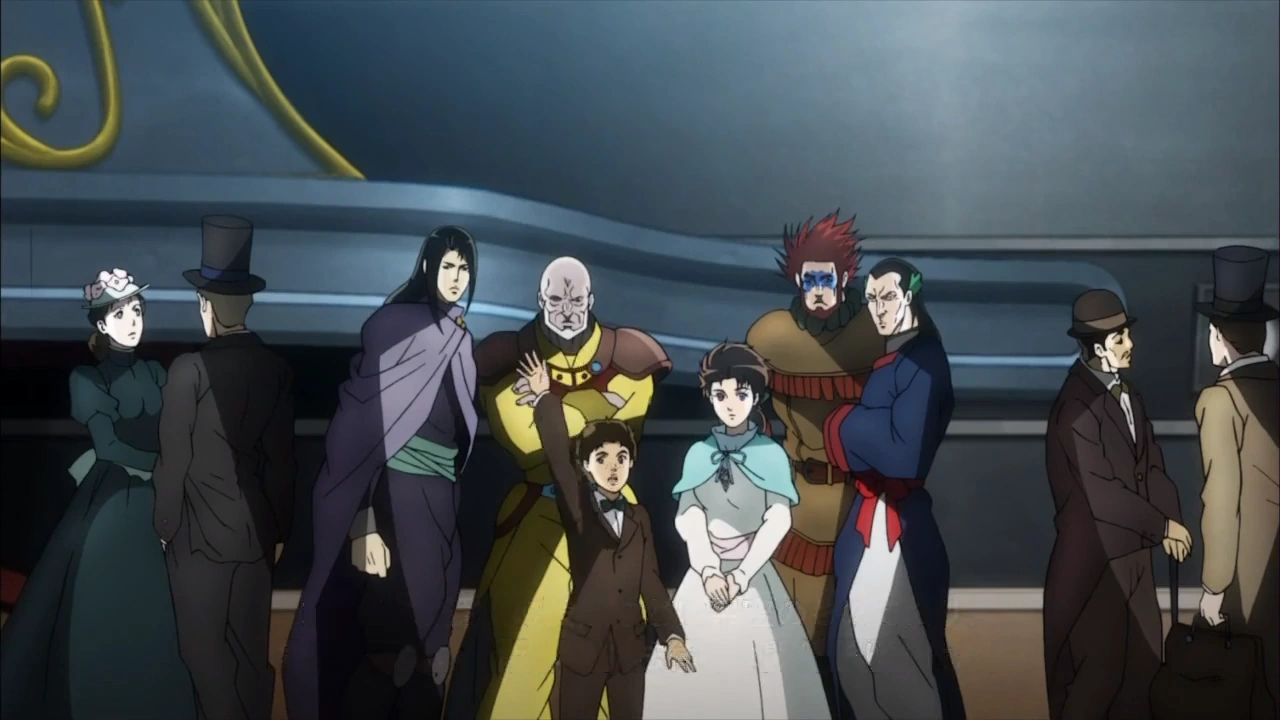
What it is: Victorian England. Jonathan Joestar, a gentle nobleman’s son, faces off against Dio Brando — the most iconic villain debut in the franchise — over a mysterious Stone Mask that turns men into vampires.
Why it’s first: This nine-episode opening season is the foundation of everything: the Joestar destiny, the Stone Mask, the Ripple, and the Speedwagon Foundation (yes, that meme has an in-universe origin). Skip it and a dozen callbacks in later parts will mean nothing to you.
The honest verdict: It’s the roughest part — short, theatrical, and sometimes cheesy — but it earns its place. Nine episodes is one evening. Pay the toll.
Part 2: Battle Tendency (2012–13, Episodes 10–26)
What it is: Jonathan’s grandson Joseph Joestar — a loud, scheming, lovable trickster — battles the Pillar Men, ancient god-tier beings who invented the Stone Mask, across 1930s Europe and beyond.
Why it’s here: It continues directly from Phantom Blood’s legacy and turns the Ripple into a full combat system. It also gives the franchise one of its all-time great protagonists.
The honest verdict: The first part that feels fully, unapologetically JoJo. The final stretch is genuinely epic. If Part 1 is the toll, this is where the highway opens up.
Part 3: Stardust Crusaders (2014–15, 48 Episodes)
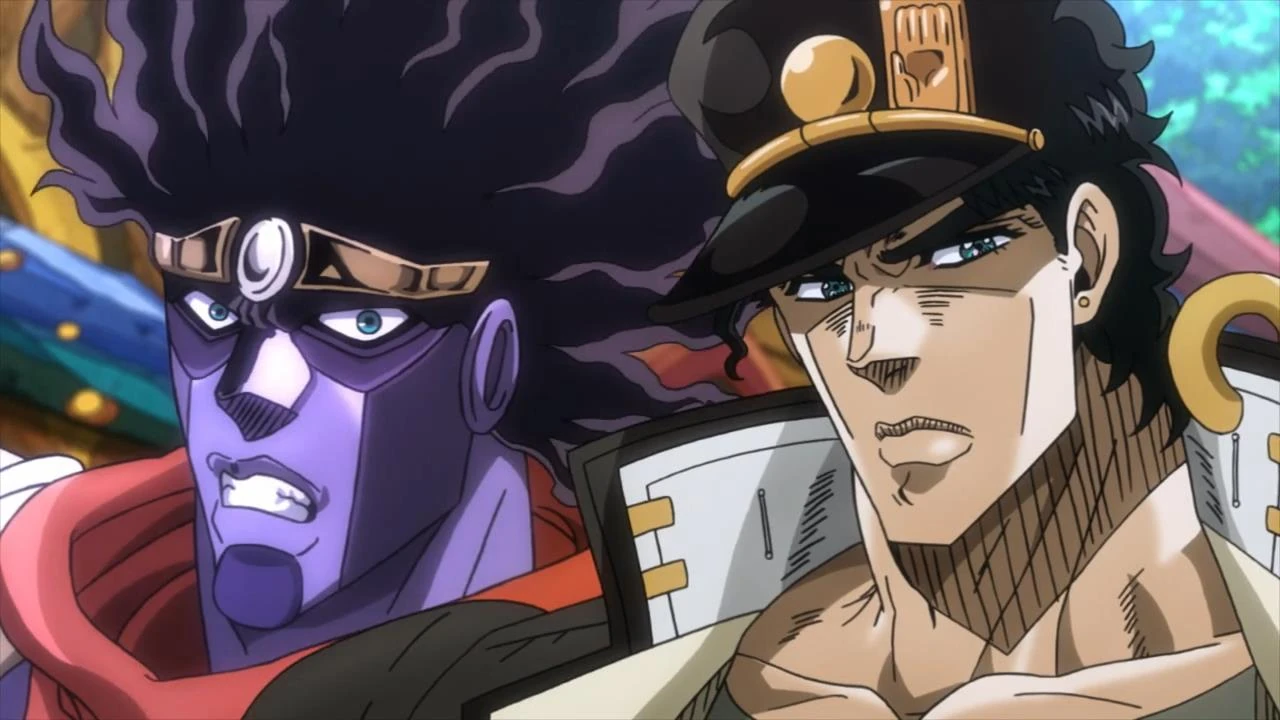
What it is: Jotaro Kujo, Joseph, and a crew of Stand users travel from Japan to Egypt to kill DIO — resurrected and wearing Jonathan’s body — before a curse kills Jotaro’s mother. This is the arc that invented Stands and made the franchise famous.
Streaming gotcha: This season was broadcast as two cours: Stardust Crusaders (24 episodes) and Stardust Crusaders: Battle in Egypt (24 episodes). Some platforms list them separately. They’re one continuous story — watch all 48 without a break if you can.
The honest verdict: The classic. The monster-of-the-week structure sags slightly in the middle, but the Egypt arc is one of the great anime finales. If you’ve ever seen a “ORA ORA ORA” meme, it came from here.
Part 4: Diamond is Unbreakable (2016, 39 Episodes)
What it is: Josuke Higashikata defends his sleepy hometown of Morioh against a serial killer hiding in plain sight. Small stakes, big atmosphere — a supernatural murder mystery with the best supporting cast in the series.
Why it’s here: Direct sequel to Stardust Crusaders (Josuke is Jotaro’s uncle — yes, time works like that in this family), and it deepens the Stand system into something tactical and strange.
The honest verdict: The comfort-food JoJo. Slower and stranger than Part 3, with a finale that pays off everything. Many fans’ favorite part — go in trusting the pacing.
Part 5: Golden Wind (2018–19, 39 Episodes)
What it is: Giorno Giovanna — DIO’s son, carrying Joestar blood — infiltrates Italy’s most powerful mafia organization to overthrow its boss. Gang story meets Stand battles at their most creative.
Why it’s here: It builds on everything the previous parts established and pushes Stand fights into pure tactical chess. Widely considered the peak of Stand combat in the entire franchise.
The honest verdict: The tightest, most consistently intense part. Almost zero filler momentum, a villain for the ages, and the most rewatchable fights in JoJo. Start here? No — but it’s the reward for not starting here.
Part 6: Stone Ocean (2021–22, 38 Episodes)
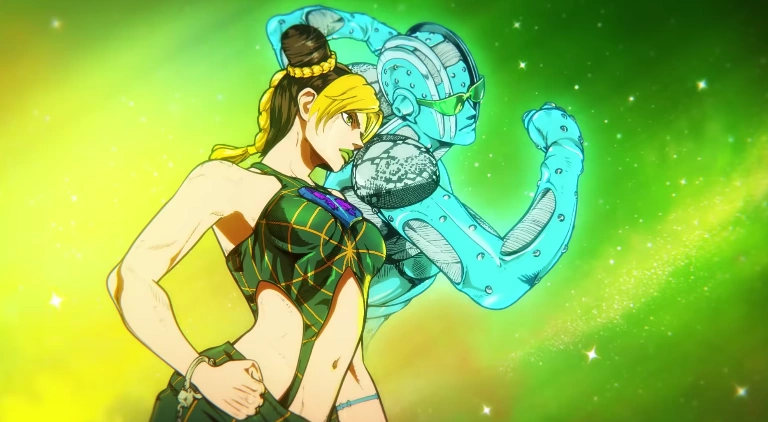
What it is: Jolyne Cujoh — Jotaro’s daughter, the franchise’s first female JoJo — is framed for murder and locked in Green Dolphin Street Prison, where a disciple of DIO is executing a plan decades in the making.
Streaming gotcha: Netflix released Stone Ocean in three batches (12 + 12 + 14 episodes) between December 2021 and December 2022. They’re all available now — ignore the release history and watch it as one 38-episode season.
The honest verdict: The most divisive part: a pressure-cooker prison setting and a finale that splits fans to this day. Watch it with an open mind — it’s doing something no other part attempts, and its ending matters for understanding why Part 7 exists.
Part 7: Steel Ball Run (2026–present, airing on Netflix)
What it is: 1890s America. Johnny Joestar, a disgraced former jockey, joins the Steel Ball Run — a cross-country horse race with a $50 million prize — alongside the enigmatic Gyro Zeppeli. A brand-new continuity with new versions of familiar names.
Where it stands right now: The anime premiered worldwide on Netflix on March 19, 2026 with a 47-minute first episode, and new episodes are releasing weekly through 2026. We’re tracking every release date on our Steel Ball Run episode schedule hub, updated as Netflix drops them.
The honest verdict: The manga Steel Ball Run is widely considered Araki’s masterpiece, and the anime adaptation has the franchise’s biggest production budget ever. It’s designed as a fresh start — but the emotional gut-punches land hardest if you know who the Joestars are. That’s why it’s seventh on this list, not first.
The Side Roads: OVAs, Movies, and One Lost Film
Thus Spoke Kishibe Rohan (2017–2021, 4 OVAs)
Four standalone horror-mystery episodes starring Rohan Kishibe, the manga artist from Diamond is Unbreakable, researching stories that get far too weird. Watch after Part 4 — the episodes work best when you already know Morioh and its residents. Excellent, but genuinely optional.
Diamond is Unbreakable Chapter 1: Jormungand (2016, OVA)
A short anime adaptation of a Part 4 manga side chapter, bundled with the Blu-ray releases. A fun 20-minute extra for completists — nothing essential happens, but it’s a clean slice of Morioh life.
The 1987 Phantom Blood film (lost media)
Before the 2012 series, Phantom Blood got a theatrical film in 1987 that was never released on home video and is considered lost. You’re not missing anything watchable — the 2012 adaptation covers the same story far better.
Diamond is Unbreakable live-action film (2017)
A Japanese live-action movie covering a slice of Part 4. Curiosity for hardcore fans only — the 2016 anime is the definitive version of this story.
The Big Questions Every New JoJo Fan Asks
Can I skip Phantom Blood?
People have been asking this since 2012, and the answer is still no. It’s only nine episodes, it introduces Dio (whose shadow hangs over Parts 1 through 6), and it plants the seeds for Stone Ocean’s entire premise. Fans who “skipped to Stardust Crusaders” spend years confused about references everyone else gets. One evening now saves you years of secondhand context.
Why does Stardust Crusaders show up under two different names?
Production split the 48-episode season into two broadcast cours: Stardust Crusaders and Stardust Crusaders: Battle in Egypt. Streaming services label them inconsistently — Netflix collects all 48 as one season, while Crunchyroll may list the Egypt half separately. Both halves are canon, in order, with zero filler. Just find both halves and keep going.
Stone Ocean dropped in batches — does the order matter?
Only in the sense that the three batches are one continuous story: episodes 1–12, then 13–24, then 25–38. There are no recap specials or alternative cuts. Watch it straight through.
Can I jump straight into Steel Ball Run since it’s a new continuity?
You can — it’s written as a fresh start, with new characters in 1890s America. But Steel Ball Run is full of deliberate echoes: names, abilities, and motifs pulled from six parts of history. New viewers get the plot; returning viewers get the chills. If the 2026 anime got you curious, let it pull you backward through Parts 1–6 first. If you absolutely refuse 190 episodes of homework, Part 3 (Stardust Crusaders) is the single most useful pre-watch.
What about the parts after Steel Ball Run — JoJolion and The JoJoLands?
Parts 8 and 9 of the manga exist but have no anime adaptation announced as of late 2026. If Steel Ball Run finishes and you’re starving for more, the manga is right there — but for watching purposes, the list above is the complete anime.
Where to Watch JoJo in 2026
Netflix is the JoJo home base. Every episode of the franchise streams there worldwide, and Stone Ocean and Steel Ball Run are Netflix exclusives — you cannot watch Parts 6 and 7 anywhere else.
Crunchyroll carries Parts 1 through 4 (Phantom Blood, Battle Tendency, Stardust Crusaders, Diamond is Unbreakable) in most regions. Hulu, Prime Video, Peacock, and Tubi also carry the early parts in the US, though catalogs rotate — check your region before committing to a platform. If you want one subscription and zero thinking, take Netflix.
If you’d rather own it, the part-by-part Blu-ray collections are the way in: browse JoJo Blu-ray sets on Amazon. And if you want the source material that started the 2026 wave, the Steel Ball Run manga is one of the great reads of the medium.
Disclosure: BakaBuzz may earn a commission from purchases made through our Amazon links, at no extra cost to you. It keeps the site running.
Frequently Asked Questions
How many episodes of JoJo’s Bizarre Adventure are there?
As of October 2026, the anime has six seasons covering seven parts, totaling over 190 episodes — and counting, with new Steel Ball Run episodes releasing weekly on Netflix.
What’s the best JoJo watch order — release order or something else?
Release order is the story order for Parts 1 through 6, so there’s no debate to have. The only twist is Steel Ball Run (Part 7), a new continuity that still lands best after the original six.
How long does it take to watch all of JoJo?
Roughly 80 hours for Parts 1–6, plus whatever has aired of Steel Ball Run. At two hours a night, that’s a six-week commitment — shorter than most people think, because the early parts are genuinely compact.
Is JoJo’s Bizarre Adventure one continuous story?
Parts 1 through 6 form one continuous saga spanning six generations of the Joestar family, with each part following a new JoJo. Steel Ball Run (Part 7) resets the continuity entirely while echoing the same names and themes.
Do I need to read the manga to follow the anime?
No. The anime is a faithful, complete adaptation of each part it covers. The manga matters only if a part has no adaptation yet — which, past Steel Ball Run, is currently the case for Parts 8 and 9.
The Verdict
JoJo is the rare long-running franchise where the “correct” watch order is also the obvious one: start at Phantom Blood and don’t stop until Steel Ball Run. Nine episodes gets you in the door, 48 get you hooked, and by the time Giorno stands in the Colosseum or Jolyne faces her ending, you’ll understand why this bloodline has carried anime for over a decade. And with Steel Ball Run airing weekly right now, there has never been a better moment to start — you’ll reach the new episodes exactly as the world watches them.
Not sure what to watch after you finish? Run any show you loved through our free anime finder and it’ll match you with your next obsession. And if you’re planning your next watch-order deep dive, our Bleach watch order roadmap and Fate watch order guide untangle the two messiest franchises in anime.