



 Mohsin Lag
Two months ago, almost nobody outside the Kinema Citrus fanbase knew what Goodbye, Lara was. Now it is trading the top spot on Anime News Network’s weekly rankings, IndieWire has run a headline calling it the best Disney remake of the year — despite it having nothing to do with Disney — and the show’s quiet Monday-night episodes are doing the thing no marketing campaign can fake: people keep recommending it to each other in comment sections.
It is a Little Mermaid retelling from the studio behind Made in Abyss, and its premise is the kind of thing that sounds obvious the second you hear it: what happens after the fairy tale ends? Not the Disney version, where the wedding happens and the credits roll. The Hans Christian Andersen version, where the mermaid dissolves into sea foam and the prince marries someone else. Goodbye, Lara takes that bitter ending and builds an entire modern story on top of it. Here’s everything worth knowing before you start it.
What Goodbye, Lara Is About
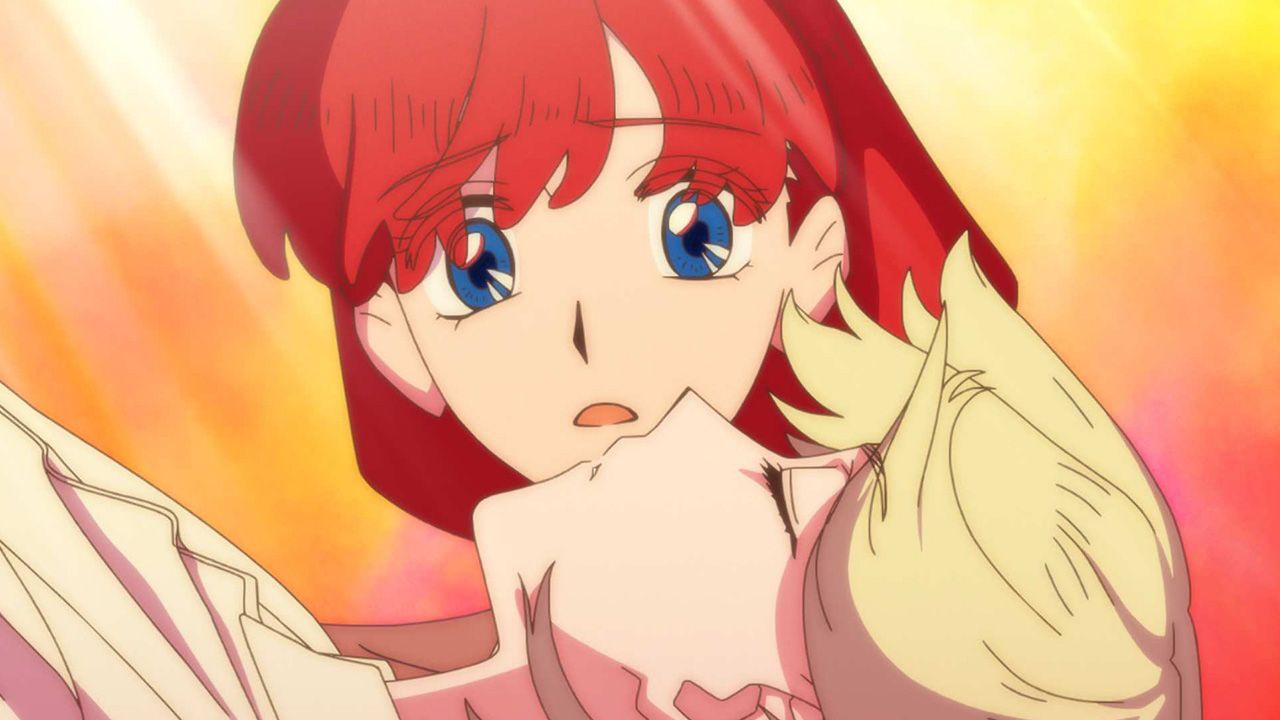
Two hundred years ago, a mermaid princess named Lara fell in love with a human prince. The mermaid world forbade it, but Lara went anyway — she took a potion from the witch Grace, traded her voice for legs, and chased the romance. It ended the way Andersen wrote it: the prince turned on her, and she dissolved into sea foam.
That is where the show actually begins. The premiere spends its first fifteen minutes sprinting through the original tale — the kingdom under the sea, the father king, the forbidden love, the potion, the heartbreak — and then pulls the rug: Lara wakes up in Lake Biwa, Japan’s largest freshwater lake, in modern-day Shiga Prefecture. She is human again, with no voice to trade this time, and she has been given a second chance. Her people, the merfolk, are frozen in an enchanted sleep — a direct consequence of what she did two centuries ago. The condition for waking them: Lara has to find “true love.” Whatever that means in 2026 Ōtsu, between convenience stores and railway crossings and a high school she never asked to attend.
So the show is a fairy-tale princess learning how to exist in the real world while the clock runs on everyone she loves. The fantasy isn’t the mermaid part. The fantasy is modern Japan, seen through the eyes of someone who has never used a smartphone, never ridden a bus, never held a part-time job. Watching Lara discover all of it — grocery aisles as wonderlands, a vending machine as magic — is the quiet engine of the whole series.
Why It’s Not Just Another Little Mermaid
Three decisions make this show different from every other adaptation that came before it, and they’re worth understanding before you press play.
First, it keeps the unhappy ending. Andersen’s tale is a tragedy — the mermaid fails, dissolves, and the story is about what she was willing to sacrifice. Disney sanded that off, and almost every anime-adjacent retelling since has followed Disney’s shape. Goodbye, Lara treats the tragedy as canon and, more interestingly, as backstory. The bitter ending is not the climax of this show; it’s the wound the show starts from. The entire series is an argument about whether a second chance can exist after a first life that ended in foam.
Second, the modern world is the real fantasy. The show is set almost entirely around Shiga Prefecture — Ōtsu, Lake Biwa, ordinary streets, ordinary people. The magical elements are rationed. When Grace the sea witch reappears in the present, she’s a goldfish in a bag, dispensing advice from a windowsill. The grounded setting is what makes the fantastical moments hit, and it gives the show a texture most fairy-tale anime never bother with: the sound of a rice cooker finishing, the weight of a school bag, the specific boredom of a convenience-store shift.
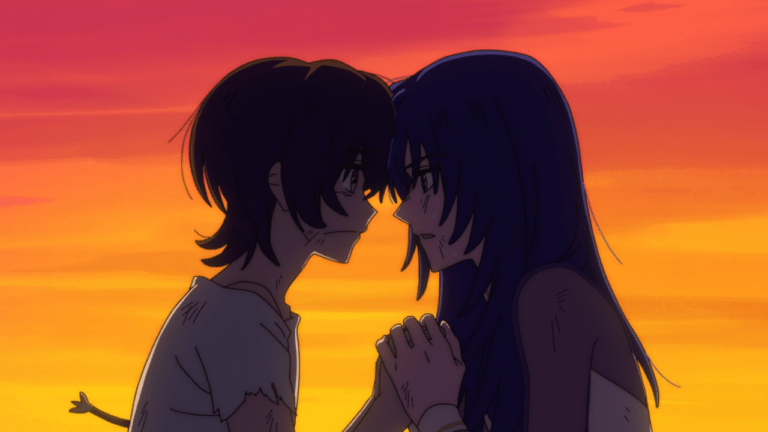
Third — and this is the one getting people talking — the show keeps building toward the question of whether Lara’s true love has to be a man at all. Lara’s anchor in the present is Mari, a sarcastic high school tomboy who boxes. Their first meeting is Mari punching the confused girl unconscious. Not love at first sight. But over the first episodes, Mari grudgingly gives Lara a place to stay, then starts protecting her, then starts caring in a way that the show refuses to label yet. IndieWire’s review framed it bluntly: this might be the rare fairy-tale adaptation building toward a queer answer. For a primetime slot, that’s a bold place to steer a classic, and the show is doing it without announcing itself — which is precisely why it works.
The People Making It
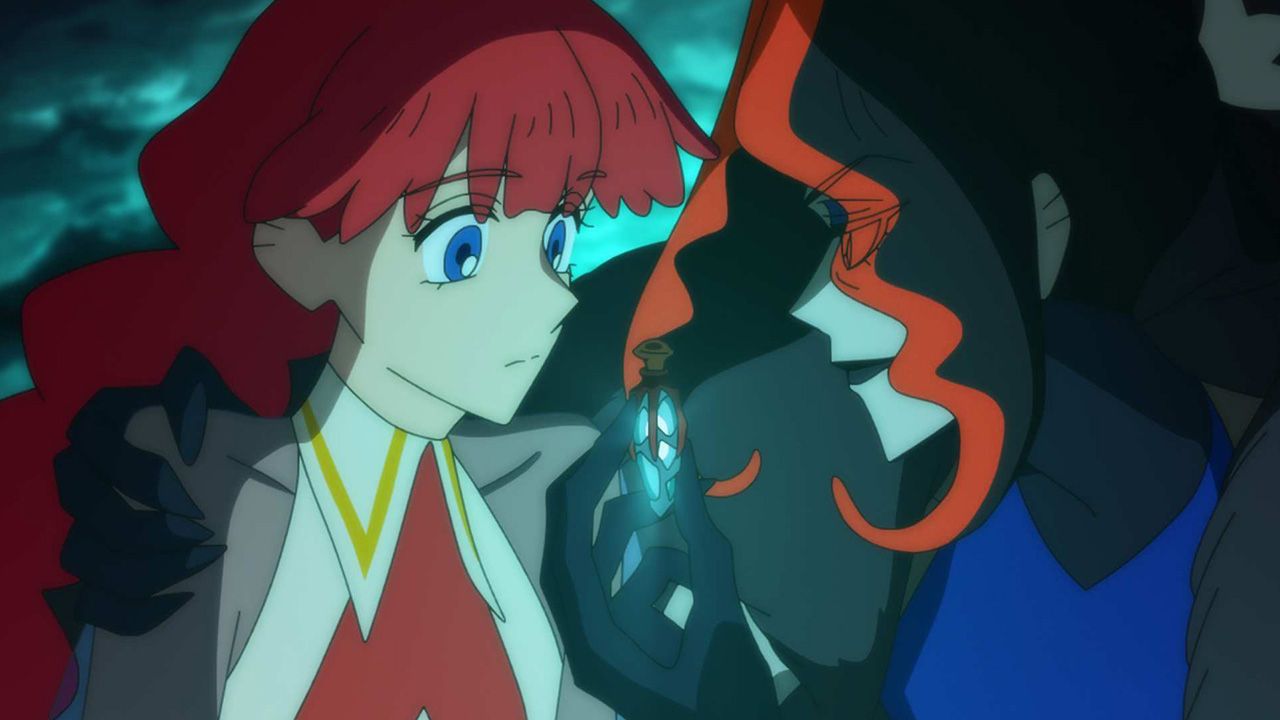
Goodbye, Lara is an original anime — no manga, no light novel — produced by Kinema Citrus to mark the studio’s fifteenth anniversary. If the studio name rings a bell, it’s because these are the people behind (or alongside) some of the most visually distinct shows of the last decade: Made in Abyss (co-production), The Rising of the Shield Hero, Revue Starlight, and Barakamon. Kinema Citrus does two things more reliably than almost any mid-size studio: character acting and backgrounds. Every frame of Goodbye, Lara is built on those two strengths — faces that actually think, and scenery worth pausing on.
The staff is deliberately stacked. Direction comes from Takushi Koide, series composition from Anna Kawahara, character designs from Shiori Tani, and the score from Yuma Yamaguchi. The opening theme is by Ikimonogakari — a genuinely huge get for an original series, the kind of band that normally only touches established franchises — and the ending theme, “Hearts Glow” by Hana Hope, has become a small phenomenon of its own, with the creditless version circulating on its own merits.
None of that guarantees quality, of course. But an original anime with this staff, this music budget, and a studio celebrating its anniversary is a different creature from a seasonal adaptation made on autopilot. Everyone involved is treating this as a statement piece, and it shows in the work.
The Characters Who Carry It
Lara (voiced by Hana Hishikawa) is the engine of everything, and the show makes the smartest possible choice with her: she is naive, but not stupid. Two centuries of guilt sit under everything she does — she got her people frozen, and she knows it — so her wide-eyed adjustment to the modern world is never played as airhead comedy. It’s played as someone carrying a debt, discovering that the world she gave up her life for is weirder and kinder than the fairy tale promised.
Mari Otsu (Nana Kawaishi) is the counterweight — blunt, dry, allergic to sentiment. She boxes, she works, she doesn’t have time for mermaid nonsense. Her arc, in the early episodes, is the show’s best magic trick: watching her go from “I’m calling the police” to “fine, you can stay one night” to something she won’t say out loud. The chemistry between the two leads is what carries the quieter episodes.
Around them, the supporting cast keeps the fairy tale alive without letting it take over. Grace is the show’s most interesting rewrite: the villain of the original tale, revealed over time as a witch who cared more than the story let on — now a goldfish with all her memories and none of her power, guiding Lara toward a second attempt. Lisa, Lara’s sister from the old life, lingers at the edges of the story in ways the show hasn’t explained yet. And Luca, a boy in the present who looks uncannily like the prince — a deliberate, uncomfortable echo the show drops in and then lets sit there. You’re not supposed to trust him. The show knows you won’t.
The Look of the Thing
It would be a mistake to talk about this show without talking about how it looks, because the visuals are doing half the storytelling. Kinema Citrus has always been a background-art studio — the abyss in Made in Abyss, the countryside in Barakamon — and Goodbye, Lara is the most indulgent version of that instinct yet. Lake Biwa at dusk, the Biwako Ohashi bridge, the narrow shopping arcades of Ōtsu: the show shoots Shiga Prefecture like a travelogue that happens to have a mermaid in it. The local government has effectively been handed a promotional film without paying for it, and the response in Shiga has been exactly what you’d expect — pilgrimage maps, tie-in events, tourists photographing vending machines.
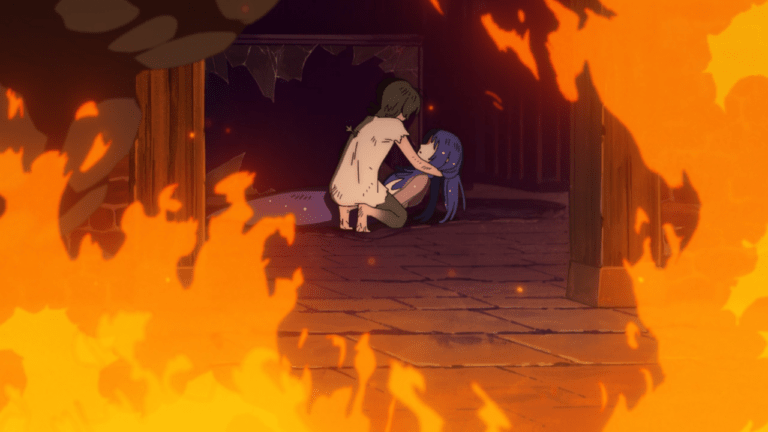
The character animation is where the anniversary budget shows. Lara’s body language does the work her (returned, but rusty) speech can’t — the way she holds a shopping basket with both hands, the way she bows too deeply at a register, the way she stands in a crosswalk waiting for a signal she doesn’t understand. It’s small stuff, but it’s the exact small stuff that makes you believe a two-hundred-year-old mermaid could actually pass for a high school student. And the direction knows when to go quiet: several of the show’s best scenes are just two people and a window, no music, letting the dialogue breathe.
The One Risk the Show Still Has
Being fair, because a recommendation should be honest about the hard parts: Goodbye, Lara is not a finished story yet, and the version of it we have right now is taking on real risk. The show has to land three things at once — the resolution of the Lara–Mari relationship, the fate of the sleeping merfolk, and whatever the show is doing with Luca, the prince lookalike who has “twist incoming” written all over him. That’s a lot of payoff to deliver in a single cour, and anime originals have a long, proud history of fumbling exactly this kind of final act.
The early signs are good — the writing so far has earned the benefit of the doubt, and the show seems to know precisely what questions it’s asking. But if you’re the kind of viewer who has been burned by an original series before (we all have), the safest posture is cautious enthusiasm: watch it now, love it now, and let the finale make its own case in September.
Why It Blew Up This Summer
Context matters here. Summer 2026 is one of the heaviest seasons in years: the Bleach finale is airing, Mushoku Tensei III is adapting its most hyped arc, Though I Am an Inept Villainess has been dominating the weekly charts, and Sparks of Tomorrow arrived with a mountain of promotion. In a season full of loud shows, Goodbye, Lara is the quiet one — and that turned out to be the winning position.
The week of August 5–11, it sat at number two on Anime News Network’s weekly rankings, a single spot behind Inept Villainess — for an original with zero source-material fanbase, that’s a genuine word-of-mouth achievement. The IndieWire piece sealed it: mainstream film coverage of a seasonal anime that isn’t a battle shonen or a movie is rare, and the framing — “the best Disney remake of the year” — gave the show a shorthand that spread fast. Add the creditless ending theme doing numbers on its own, and you have the classic pattern of a sleeper becoming the season’s consensus pick: no big launch, just episode after episode of people saying “have you seen this one?”
The comparison people keep reaching for is that Goodbye, Lara feels like what you’d get if a Makoto Shinkai film had a weekly budget and a fairy tale to spend it on. That’s not exactly right — the show is funnier and warmer than Shinkai usually allows himself — but it captures the important part: the show looks expensive in the way that matters, which is emotionally, not technically.
Where to Watch It
This one’s simple, which is refreshing. Goodbye, Lara streams worldwide on Crunchyroll, with English subtitles at broadcast and an English dub available as well. In Japan it airs on Tokyo MX, BS Asahi, ytv, and AT-X. New episodes land Mondays — the series premiered July 6, 2026, and the seventh episode lands August 17.
An episode count for the full run hasn’t been formally announced, so treat the usual one-cour assumption (roughly a dozen episodes) as exactly that — an assumption. At the current pace, the finale should land sometime in September, which gives latecomers a clean window to binge everything at once if they’d rather not wait week to week.
Is It Worth Your Time? An Honest Verdict
Who it’s for: romance fans, shoujo heads, anyone who burned out on battle shonen pacing and wants a show that trusts silence. If you loved Fruits Basket‘s redemption arcs or A Lull in the Sea‘s underwater melancholy, this is squarely in your lane. If you’re the kind of viewer who pauses on good background art, this show will destroy your schedule.
Who it’s not for: anyone who needs a fight scene every episode. The pacing is slow and confident — a feature, not a bug, but know what you’re signing up for. The first fifteen minutes are a fairy tale at double speed, and then the show deliberately downshifts into slice-of-life gear for long stretches. If episode 2’s supermarket trip bores you, the show is not going to change your mind later; it’s going to do the supermarket trip again, but sadder.
Early verdict, six episodes in: the best non-sequel of the season, and the most rewatchable premiere I’ve seen in years. The first episode alone — a complete tragedy, told in fifteen minutes, then pivoting into something hopeful and strange — is worth twenty-two minutes of anyone’s time, even if they never watch another frame.
What to Watch After Goodbye, Lara
If the show hooks you and you need something adjacent while waiting for Mondays, five quick picks:
- Josee, the Tiger and the Fish — a film, but the closest thing in tone: a guarded girl, a warm boy, the ocean, and a romance that earns every beat.
- The Ancient Magus’ Bride — a girl sold into a non-human world finds family there. The same fairy-tale logic, run through a much darker filter.
- Fruits Basket — for the redemption angle. A cursed family, a girl who stays, and the best “second chance” storytelling anime has ever done.
- A Lull in the Sea (Nagi no Asukara) — underwater people on the surface, two worlds in contact, and the exact same ache of loving across a boundary.
- Ride Your Wave — grief and the ocean, done by Masaaki Yuasa. Sadder than Lara by a mile, but it hits the same nerve.
And if you want more lists in this vein, our tearjerker anime rankings and the anime where the bad boy changes for love roundup both skew toward exactly this kind of slow-burn emotional storytelling.
Frequently Asked Questions
- Is Goodbye, Lara based on a manga? No. It’s an original anime created by Kinema Citrus for the studio’s fifteenth anniversary, inspired by Hans Christian Andersen’s The Little Mermaid.
- How many episodes will it have? A formal count hasn’t been announced. It airs weekly on Mondays, and a one-cour run of roughly a dozen episodes is the safe assumption.
- Where can I watch it? Crunchyroll worldwide, with subs at broadcast and an English dub. In Japan: Tokyo MX, BS Asahi, ytv, and AT-X.
- Is the Lara–Mari relationship romantic? The show is building in that direction — it’s one of the season’s most discussed threads — but it’s being developed slowly and without labels so far.
- Is it sad? The first fifteen minutes, absolutely — the fairy-tale section keeps Andersen’s tragic ending. After that it’s mostly warm and strange, with sadness kept in reserve.
I did not expect the anime about a mermaid discovering supermarkets to be the thing I think about on Mondays. Summer 2026 is weird like that. Don’t fight it — just watch the first episode.