



 Mohsin Lag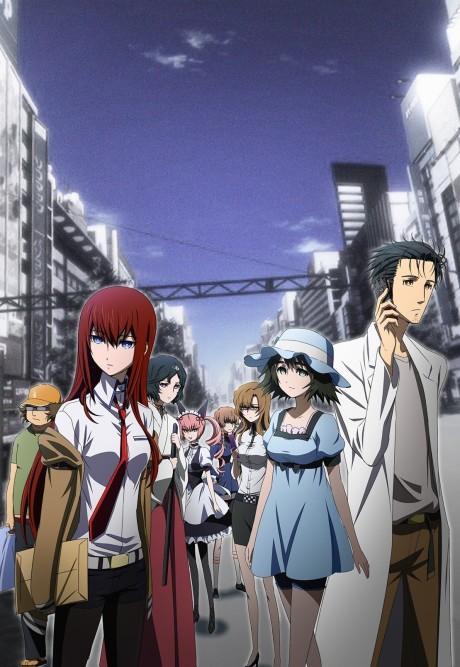
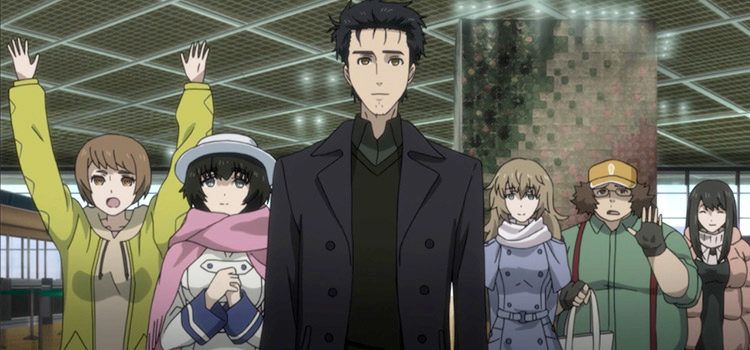
Steins;Gate is the time-travel story that made the genre feel like a trap rather than a toy. A self-styled mad scientist, a microwave that sends text messages to the past, and a group of friends who treat their discovery as a game — right up until the universe starts collecting on every message they sent. The show’s reputation rests on its second half, and it’s earned: what begins as a quirky sci-fi comedy becomes a slow-motion horror about consequence, and the pivot is one of the most famous in anime. It is also number two on our list of anime most likely to ruin your sleep schedule — the second half does not let go.
That’s the list below: time-travel and mind-game anime that take their mechanics seriously — shows where the rules matter, the cost is real, and the plot rewards you for paying attention. Some picks match the time-travel premise directly, some match the psychological pressure, some match the specific feeling of realizing too late what the story was really about. I’ll be honest about which.
| # | Anime | What it’s for |
|---|---|---|
| 1 | Re:ZERO -Starting Life in Another World- | The closest match in structure and the show Steins;Gate fans most often graduate to. Subaru dies. Repeatedly. Every deat… |
| 2 | Erased | The tightest thriller of the batch. A failed manga artist with a power he calls “Revival” — involuntary jump… |
| 3 | Death Note | The mind-game pick, included for the thing Steins;Gate and Death Note share more than any premise: respect for the rules… |
| 4 | Summer Time Rendering | The most underrated time-loop anime ever made, and the closest match to Steins;Gate’s second-half intensity. Shinpei ret… |
| 5 | The Girl Who Leapt Through Time | The classic film pick, and the emotional ancestor of the whole genre. A high school girl discovers she can leap through … |
| 6 | Madoka Magica | The pivot pick, and the show that taught an entire generation that tone can turn on a dime — the same structural move St… |
| 7 | The Tatami Galaxy | The stylistic pick, and the most honest time-story on this list. A college student endlessly relives his two years, each… |
| 8 | Orange | The emotional pick. Naho receives letters from her future self — ten years later — spelling out exactly what she must do… |
| 9 | Vivy: Fluorite Eye’s Song | The spectacle pick, and the most Steins;Gate-flavored show of the last few years. An android songstress receives a missi… |
| 10 | Link Click | The finale pick: a Chinese donghua that does the Steins;Gate formula with a twist — the protagonists dive into photograp… |
1. Re:ZERO -Starting Life in Another World-
The closest match in structure and the show Steins;Gate fans most often graduate to. Subaru dies. Repeatedly. Every death rewinds time to a checkpoint, and the show’s genius is that the resets don’t reset him — every loop leaves scars, every death is remembered, and the story is about watching a normal person break under the weight of knowledge no one else shares. It’s Steins;Gate’s “the universe collects” theme run through a fantasy filter, with the same structure: light opening, harrowing middle, and a protagonist who earns every inch of his growth. Season three is airing now and the series has never been better.
2. Erased
The tightest thriller of the batch. A failed manga artist with a power he calls “Revival” — involuntary jumps a few minutes into the past, always to prevent a tragedy — is sent eighteen years back to stop a serial killer from claiming three childhood victims. It’s Steins;Gate’s premise compressed into twelve episodes: the past as a puzzle, a mystery to solve with a time limit, and the specific horror of knowing what’s coming. The ending is famously divisive (the manga’s is better), but the journey is superb, and the winter atmosphere is unforgettable.
3. Death Note
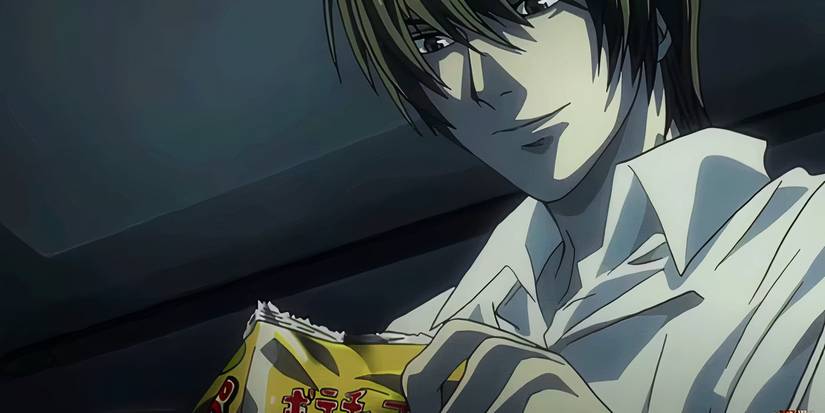
The mind-game pick, included for the thing Steins;Gate and Death Note share more than any premise: respect for the rules. Both shows build their entire drama out of carefully stated mechanics and then escalate by exploiting them — Steins;Gate with worldlines and divergence, Death Note with the notebook’s clauses. Watching Light and L work through the implications of a rule is the same pleasure as watching Okabe puzzle out a worldline shift. It’s a psychological thriller, not sci-fi, but the engine is identical. The first half is the best cat-and-mouse in anime.
4. Summer Time Rendering
The most underrated time-loop anime ever made, and the closest match to Steins;Gate’s second-half intensity. Shinpei returns to his island hometown for a funeral and finds a mystery: his childhood friend’s death wasn’t an accident, and the island is hiding something that resets time itself. Every loop is earned, the antagonist is genuinely frightening, and the show plays completely fair — every clue matters, every loop teaches, and the pacing never wastes a minute. It’s tighter than Steins;Gate’s opening and almost as devastating as its ending. Watch it in as few sittings as possible.
5. The Girl Who Leapt Through Time
The classic film pick, and the emotional ancestor of the whole genre. A high school girl discovers she can leap through time and spends the power on the small stuff — retaking a test, fixing a conversation, avoiding an awkward moment — until she learns, the way all these protagonists do, that time charges interest. It’s gentle where Steins;Gate is brutal, and it’s only a movie, but the lesson is the same one Okabe learns at enormous cost. The animation is Mamoru Hosoda at his warmest. Watch it when you want the genre’s heart without its teeth.
6. Madoka Magica
The pivot pick, and the show that taught an entire generation that tone can turn on a dime — the same structural move Steins;Gate is famous for. It starts as a pastel magical-girl show and becomes something entirely else within three episodes, and everything about it — the art, the music, the merciless logic of its system — is calibrated for maximum impact. It shares Steins;Gate’s willingness to let its premise have real, irreversible consequences, and its ending is one of the best in anime. Go in knowing nothing. That’s the only way to watch it.
7. The Tatami Galaxy
The stylistic pick, and the most honest time-story on this list. A college student endlessly relives his two years, each loop choosing a different club, a different path, a different version of himself — searching for the “rose-colored campus life” that the narrator keeps insisting is out there. It shares Steins;Gate’s essential subject (the same person, different choices, one lesson) but treats time as a metaphor instead of a mechanic, and its ending reframes the entire show in one scene. The dialogue is the fastest in anime; keep up. Weird, wonderful, and short.
8. Orange
The emotional pick. Naho receives letters from her future self — ten years later — spelling out exactly what she must do to save the boy she loves, who doesn’t survive the year. The premise is Steins;Gate’s dilemma (a future you know, a past you must change) stripped of sci-fi machinery and aimed directly at the heart. It’s more melodrama than thriller, and the pacing tests patience, but the central question — how hard would you fight to rewrite a future you’ve already read? — is the genre’s purest form. The film companion, Orange: Future, completes it.
9. Vivy: Fluorite Eye’s Song
The spectacle pick, and the most Steins;Gate-flavored show of the last few years. An android songstress receives a mission from the future: prevent the AI war that will destroy humanity, one hundred years early — one event at a time, one century at a time. Each arc is a mini-Steins;Gate: a point in history, a disaster to avert, and the accumulating weight of everything Vivy has seen and lost. The action animation is top-tier and the emotional beats land hard. It’s a music drama wrapped in a time-war story, and it earns both halves.
10. Link Click
The finale pick: a Chinese donghua that does the Steins;Gate formula with a twist — the protagonists dive into photographs to relive (and fix) moments from the past, with strict rules about what they can and can’t change. It’s the closest modern match to Steins;Gate’s structure: episodic missions that build toward a larger, darker picture, rules that matter, and a second season that escalates into full-blown time-war territory. The animation is gorgeous and the emotional range is real. If you’ve exhausted the Japanese entries in this genre, this is the next frontier.
Frequently Asked Questions
- What’s the closest anime to Steins;Gate? Summer Time Rendering for the time-loop thriller, Re:ZERO for the structure, and Link Click for the modern match.
- Is Steins;Gate finished? Yes — the original series, the OVA, the movie, and Steins;Gate 0 together complete the story. Watch in release order, with 0 after the original.
- Which of these have sad endings? Several, but naming them is the spoiler. Bring the same emotional caution you’d bring to Steins;Gate itself.
- Is Steins;Gate slow at the start? Famously, yes — the first half is a deliberately paced comedy that seeds every payoff in the second. Most fans treat episodes 1-11 as the price of admission, and almost everyone calls it worth it on rewatch.
- Which should I watch first? Summer Time Rendering if you want the closest match. Erased if you want the tightest thriller. Madoka if you want the best show on this list.
Steins;Gate’s real lesson isn’t about time travel — it’s that every choice has a price, and the universe keeps the receipts. The ten shows above all learned that lesson the hard way, on camera.
Looking for your next watch? Our our ranked list of anime with the best animation roundup and our 2026 anime release calendar guide are the natural next stops. For more shows that get under your skin, browse our Psychological & Horror anime collection.